Renting or buying commercial property in Birmingham: what small businesses need to know
By Omar Novak · Updated 2026-09-06

Commercial property decisions carry more financial weight and legal complexity than most residential ones, so it is worth understanding the basics before you start viewing units.
Leasing versus buying
Leasing is the more common route for small and growing businesses, since it requires less upfront capital and offers flexibility if your space needs change as the business grows. Buying commercial premises builds a long-term asset and protects you from future rent increases, but ties up capital and reduces your flexibility to relocate if your needs change. Many businesses lease in the early years and consider buying once their space requirements have stabilised. If you are moving your business to the city rather than an existing local premises, our guide to relocating to Birmingham covers what newcomers need to know about finding their feet here.
| Factor | Leasing | Buying |
|---|---|---|
| Upfront cost | Lower, typically a deposit and rent in advance | Higher, deposit plus purchase costs |
| Flexibility | Easier to relocate or scale | Harder to move once committed |
| Long-term cost | Rent can increase over time | Fixed once mortgage is paid, plus ownership costs |
| Best suited to | Growing or newer businesses | Established businesses with stable space needs |
Understanding lease terms
Commercial leases vary considerably in length and structure compared with residential tenancies. Look closely at the lease length, whether there is a break clause allowing early exit, and who is responsible for repairs, insurance and maintenance, since commercial leases often place more of this responsibility on the tenant than a residential tenancy would.
Many commercial leases are what is known as full repairing and insuring, meaning the tenant covers the cost of maintaining and insuring the building, not just the interior fit-out. This can come as a surprise to a first-time commercial tenant used to residential renting, where a landlord typically covers structural repairs. Ask directly who is responsible for the roof, the exterior, and shared plant such as heating systems before you sign.
Costs beyond the headline rent
Business rates apply to most commercial premises and are a significant ongoing cost separate from rent, calculated based on the property’s rateable value. If the unit is part of a larger building, there may also be a service charge covering shared areas, plus your own costs for fitting out the space to suit your business.
Location considerations
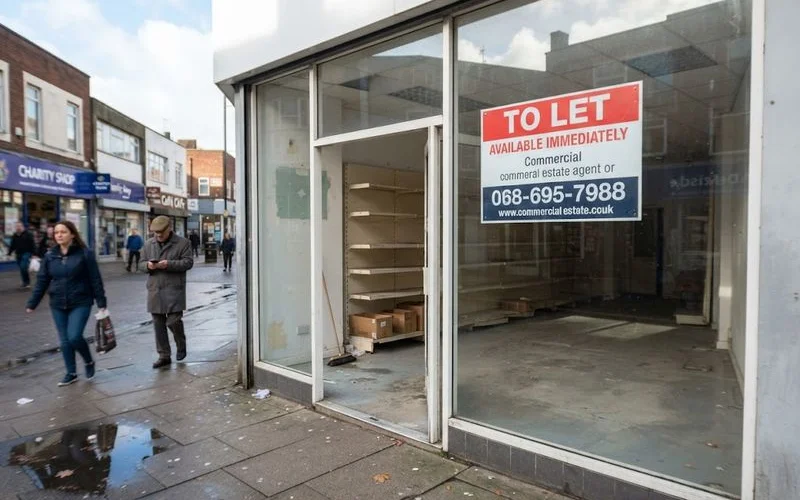
Footfall matters enormously for a retail or hospitality business, while an office or trade unit might prioritise transport links, parking, or proximity to suppliers and clients instead. Think about what actually drives your business before choosing a location purely on price.
It is worth visiting a shortlisted location at different times of day and on different days of the week before committing. A street that looks busy on a Saturday afternoon might be quiet on a weekday morning, and what looks like ample parking during a daytime viewing can disappear entirely once nearby businesses are open and their own customers or staff are parked up.
Planning permission and permitted use
Commercial premises are classified by permitted use, and changing how a property is used, for example converting a retail unit into a restaurant, can require planning permission from the local council. Always confirm the property’s current use class and whether it matches your intended business before signing anything, since assuming a property can be used however you like can turn into an expensive mistake to unwind.
Getting professional input
Commercial leases are usually more heavily negotiated than residential tenancies, covering things like rent-free periods during fit-out, rent review clauses, and break options. A solicitor experienced in commercial property and, ideally, a specialist commercial property agent can help you avoid signing terms that look fine on the surface but create problems later.
Commercial property commitments involve significant financial risk and legal complexity, so treat this as general orientation rather than advice on a specific lease or purchase; get professional legal and financial advice before signing anything.
Negotiating a commercial lease is rarely a quick process, and rushing it to meet a self-imposed opening date is one of the more common reasons small businesses end up with unfavourable terms. Building extra time into your business plan for this stage, rather than treating the lease as a formality, tends to pay off once you are actually trading.
Our scoring method explains how we assess commercial property agents in Birmingham, and you can browse current listings from our homepage.
Common questions
- Is it better to lease or buy commercial property as a small business?
- Leasing keeps upfront costs lower and offers more flexibility to move or scale, while buying builds an asset and avoids future rent increases. Most small businesses starting out lease, and consider buying once they have a stable, established need for a specific location.
- What is a typical commercial lease length?
- Commercial leases vary widely, from short rolling terms of a year or two through to longer leases of ten years or more, often with a break clause partway through that lets either side end it early.
- What costs come with commercial premises beyond rent?
- Business rates, service charges if the property is part of a larger building, insurance, and your own fit-out costs are all common additions to the headline rent figure.
- Can I negotiate the terms of a commercial lease?
- Yes, commercial lease terms are generally more negotiable than residential tenancies, including rent-free periods, break clauses, and who is responsible for repairs and maintenance.